African American Heroes of the American Revolution
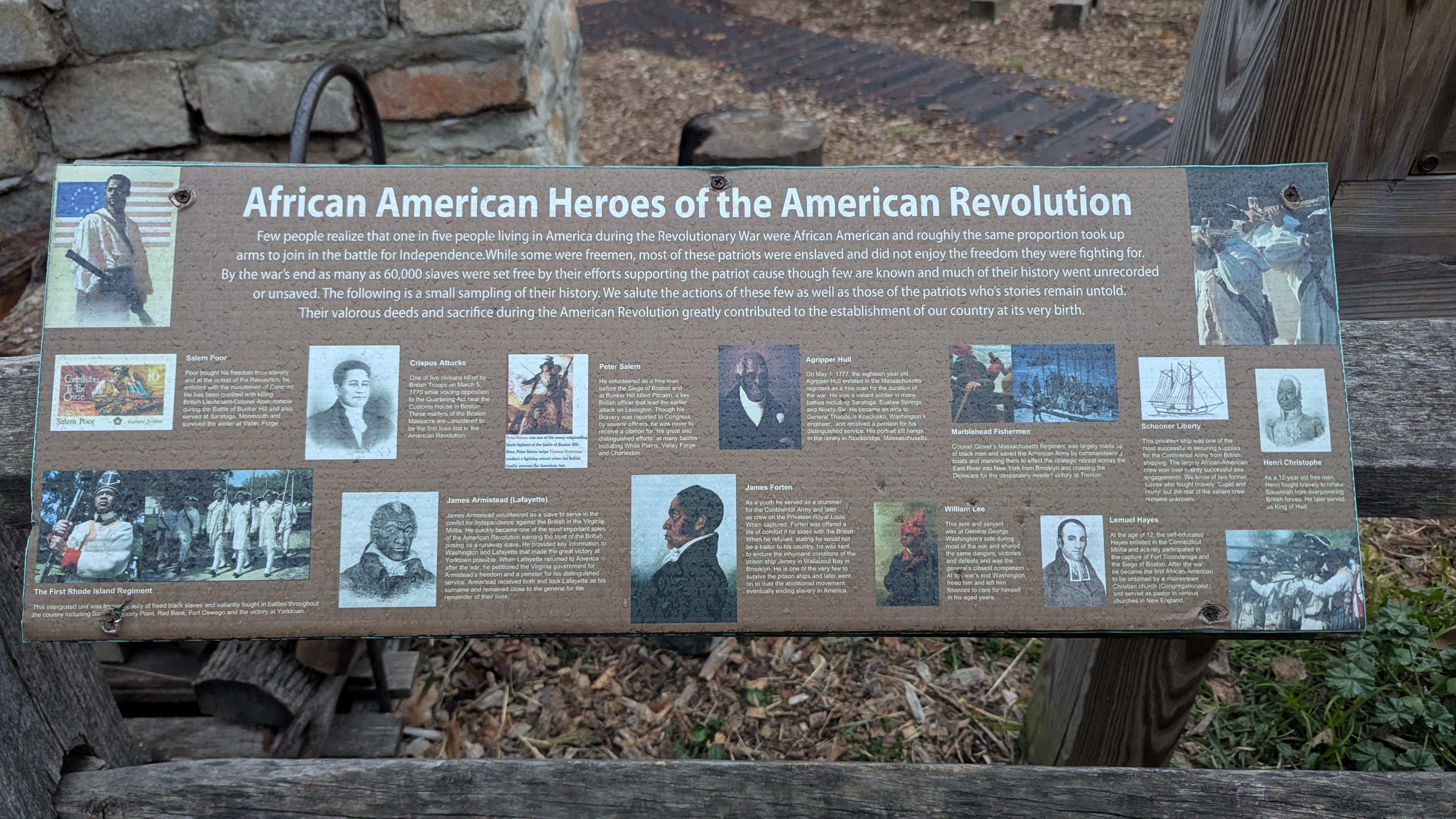
Few people realize that one in five people living in America during the Revolutionary War were African American and roughly the same proportion took up arms to join in the battle for Independence. While some were freemen, most of these patriots were enslaved and did not enjoy the freedom they were fighting for. By the war's end as many as 60,000 slaves were set free by their efforts supporting the patriot cause though few are known and much of their history went unrecorded or unsaved. The following is a small sampling of their history. We salute the actions of these few as well as those of the patriots who's stories remain untold. Their valorous deeds and sacrifice during the American Revolution greatly contributed to the establishment of our country at its very birth.
Salem Poor
Poor bought his freedom from slavery and at the outset of the Revolution, he enlisted with the minutemen of Concord. He has been credited with killing British Lieutenant-Colonel Abercrombie during the Battle of Bunker Hill and also served at Saratoga, Monmouth and survived the winter at Valley Forge.
Crispus Attucks
One of five civilians killed by British Troops on March 5, 1770 while voicing opposition to the Quartering Act near the Customs House in Boston. These martyrs of the Boston Massacre are considered to be the first lives lost in the American Revolution.
Peter Salem
He volunteered as a free man before the Siege of Boston and at Bunker Hill killed Pitcairn, a key British officer that lead the earlier attack on Lexington. Though his Bravery was reported to Congress by several officers, he was never to receive a citation for "his great and distinguished efforts" at many battles including White Plains, Valley Forge and Charleston.
Agripper Hull
On May 1, 1777, the eighteen year old Agripper Hull enlisted in the Massachusetts regiment as a free man for the duration of the war. He was a valiant soldier in many battles including Saratoga, Eualaw Springs and Ninety-Six. He became an aide to General Thaddeus Kosciusko, Washington's engineer, and received a pension for his distinguished service. His portrait stil hangs in the library in Stockbridge, Massaschusetts.
Marblehead Fishermen
Colonel Glover's Massachusetts Regiment was largely made up of black men and saved the American Army by commandeering boats and manning them to effect the strategic retreat across the East River into New York from Brooklyn and crossing the Deleware for the desparately-needed victory at Trenton
Schooner Liberty
This privateer ship was one of the most successful in securing supplies for the Continental Army from British shipping. The largely African-American crew won over twenty successful sea engagements. We know of two former slaves who fought bravely: Cupid and Harry; but the rest of the valiant crew remains unknown.
Henri Christophe
As a 12-year old free man, Henri fought bravely to retake Savannah from overpowering British forces. He later served as King of Haiti.
The First Rhode Island Regiment
This intergrated unit was formed mostly of freed black slaves and valiantly fought in battles throughout the country including Saratoga, Stony Point, Red Bank, Fort Oswego and the victory at Yorktown.
James Armistead (Lafayette)
James Armistead volunteered as a slave to serve in the confict for Independence against the British in the Virginia Militia. He quickly became one of the most important spies of the American Revolution earning the trust of the British posing as a runaway slave. He provided key information to Washington and Lafayette that made the great victory at Yorktown possible. When Lafayette returned to America after the war, he petitioned the Virginia government for Armistead's freedom and a pension for his distinguished service. Armistead received both and took Lafayette as his surname and remained close to the general for the remainder of their lives.
James Forten
As a youth he served as a drummer for the Continental Army and later as crew on the Privateer Royal Louis. When captured, Forten was offered a life of comfort if he sided with the British When he refused, stating he would not be a traitor to his country, he was sent to endure the inhumane conditons of the prison ship Jersey in Wallabout Bay in Brooklyn. He is one of the very few to survive the prison ships and later went on to lead the abolitionist movement eventually ending slavery in America.
William Lee
This aide and servant was at General George Washington's side during most of the war and shared the same dangers, victories and defeats and was the general's closest companion At the war's end Washington freed him and left him finances to care for himself in his aged years.
Lemuel Hayes
At the age of 12, the self-educated Hayes enlisted in the Connecticut Militia and actively participated in the capture of Fort Ticonderoga and the Siege of Boston. After the war, he became the first African-American to be ordained by a mainstream Christian church (Congregationalist) and served as pastor in various churches in New England.
Nearby Plaques
Loading…