
Asclepias incarnata
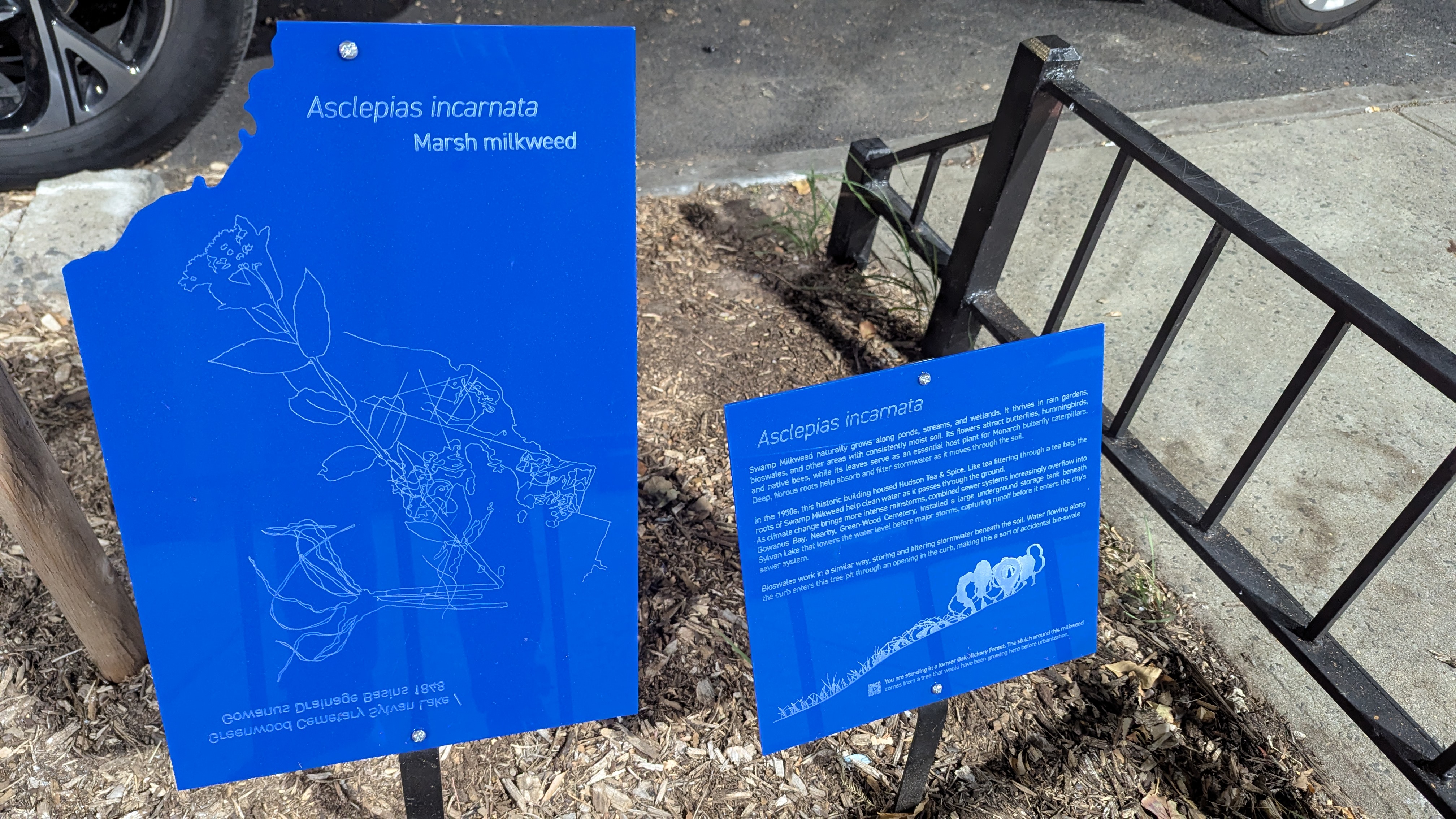
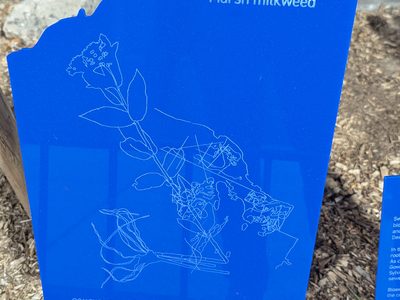
Asclepias incarnata
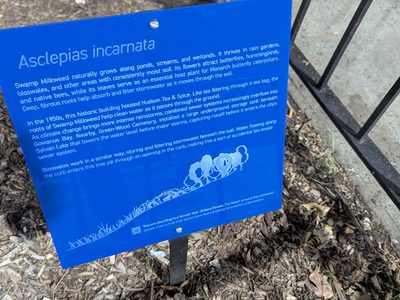
Swamp Milkweed naturally grows along ponds, streams, and wetlands. It thrives in rain gardens, bioswales, and other areas with consistently moist soil. its flowers attract butterflies, hummingbirds, and native bees, while its leaves serve as an essential host plant for Monarch butterfly caterpillars. Deep, fibrous roots help absorb and filter stormwater as it moves through the soil.
In the 1950s, this historic building housed Hudson Tea & Spice. Like tea filtering through a tea bag, the roots of Swamp Milkweed help clean water as it passes through the ground. As climate change brings more intense rainstorms, combined sewer systems increasingly overflow into Gowanus Bay. Nearby, Green-Wood Cemetery, installed a large underground storage tank beneath Sylvan Lake that lowers the water level before major storms, capturing runoff before it enters the city's sewer system.
Bioswales work in a similar way, storing and filtering stormwater beneath the soil. Water flowing along the curb enters this tree pit through an opening in the curb, making this a sort of accidental bio-swale
You are standing in a former Oak-Hickory Forest. The Mulch around this milkweed comes from a tree that would have been growing here before urbanization.
Nearby Plaques
Loading…