
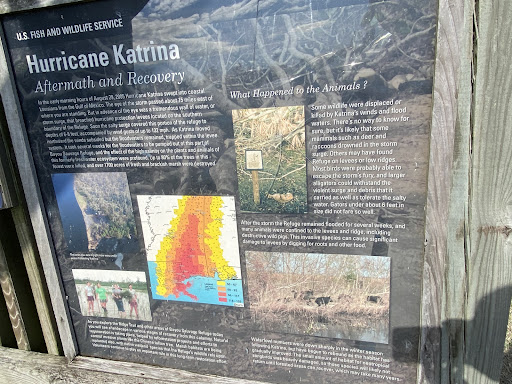
Hurricane Katrina
In the early morning hours of August 29, 2005 Hurricane Katrina swept into coastal
Louisiana from the Gulf of Mexico. The eye of the storm passed about 15 miles east of
where you are standing. But in advance of the eye was a tremendous wall of water, or
storm surge, that breached hurricane protection levees located on the southern
boundary of the Refuge. Soon the salty surge covered this portion of the refuge to
depths of 6-8 feet, accompanied by wind gusts of up to 132 mph. As Katrina moved
northward the winds subsided but the floodwaters remained, trapped within the levee
system. It took several weeks for the floodwaters to be pumped out of this part of
Bayou Sauvage Refuge, and the effect of the high salinity on the plants and animals of
this formerly freshwater ecosystem were profound. Up to 80% of the trees in this
forest were killed, and over 1700 acres of fresh and brackish marsh were destroyed.<br><br><b>What Happened To The Animals?</b><br><br>Some wildlife were displaced or
killed by Katrina's winds and flood
waters. There's no way to know for
sure, but it's likely that some
mammals such as deer and
raccoons drowned in the storm
surge. Others may have found
refuge on levees or low ridges.
Most birds were probably able to
escape the storm's fury, and larger
alligators could withstand the
violent surge and debris that it
carried as well as tolerate the salty
water. Gators under about 6 feet in
size did not fare so well.<br>
After the storm the Refuge remained flooded for several weeks, and
many animals were confined to the levees and ridge, including
destructive wild pigs. This invasive species can cause significant
damage to levees by digging for roots and other food.
Waterfowl numbers were down sharply in the winter season
following Katrina, but have begun to rebound as the habitat has
gradually improved The small amount of habitat for neotropical
songbirds was heavily damaged, so those species will likely not
return until forested areas can recover, which may take many years
.<br><br>As you explore the Ridge Trail and other areas of Bayou Sauvage Refuge today
you will see landscape in various stages of recovery from this calamity. Natural
regeneration is taking place, helped by reforestation projects and efforts to
control invasive plants like the Chinese tallow trees. Marsh habitats are being
related also, with native wetland species that the Refuge's wildlife rely upon.
Volunteers continue to play an important role in this long-term restoration effort.
Nearby Plaques
Loading…