
Ward Bread Bakery
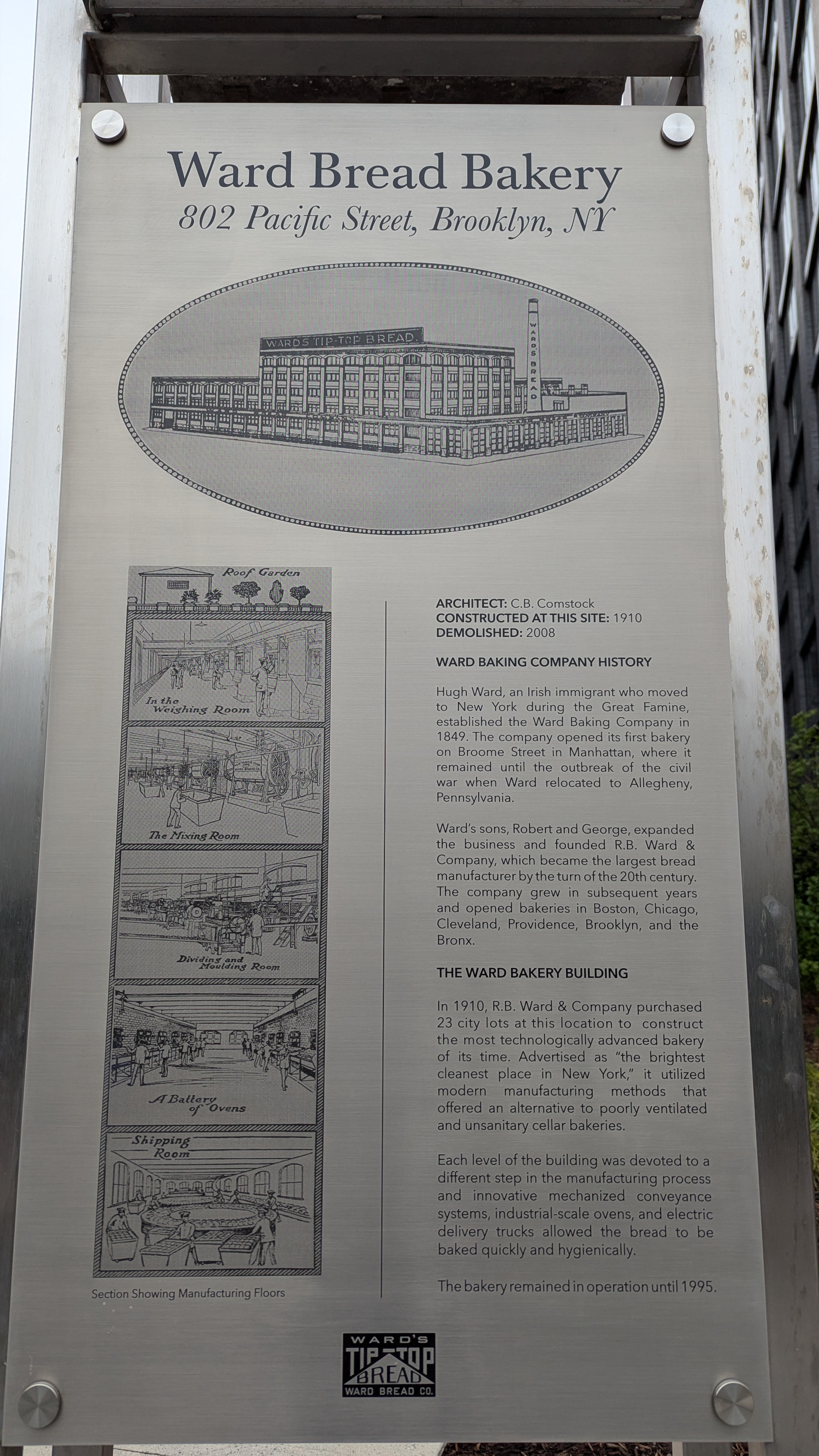
ARCHITECT: C.B. Comstock
CONSTRUCTED AT THIS SITE: 1910
DEMOLISHED: 2008
WARD BAKING COMPANY HISTORY
Hugh Ward, an Irish immigrant who moved to New York during the Great Famine, established the Ward Baking Company in 1849. The company opened its first bakery on Broome Street in Manhattan, where it remained until the outbreak of the civil war when Ward relocated to Allegheny, Pennsylvania.
Ward's sons, Robert and George, expanded the business and founded R.B. Ward & Company, which became the largest bread manufacturer by the turn of the 20th century. The company grew in subsequent years and opened bakeries in Boston, Chicago, Cleveland, Providence, Brooklyn, and the Bronx.
THE WARD BAKERY BUILDING
In 1910, R.B. Ward & Company purchased 23 city lots at this location to construct the most technologically advanced bakery of its time. Advertised as "the brightest cleanest place in New York," it utilized modern manufacturing methods that offered an alternative to poorly ventilated and unsanitary cellar bakeries.
Each level of the building was devoted to a different step in the manufacturing process and innovative mechanized conveyance systems, industrial-scale ovens, and electric delivery trucks allowed the bread to be baked quickly and hygienically.
The bakery remained in operation until 1995.
ARCHITECTURAL DESIGN
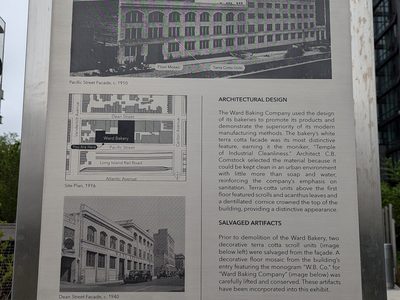
The Ward Baking Company used the design of its bakeries to promote its products and demonstrate the superiority of its modern manufacturing methods. The bakery's white terra cotta facade was its most distinctive feature, earning it the moniker, "Temple of Industrial Cleanliness." Architect C.B. Comstock selected the material because it could be kept clean in an urban environment with little more than soap and water, reinforcing the company's emphasis on sanitation. Terra-cotta units above the first floor featured scrolls and acanthus leaves and a dentillated cornice crowned the top of the building, providing a distinctive appearance.
SALVAGED ARTIFACTS
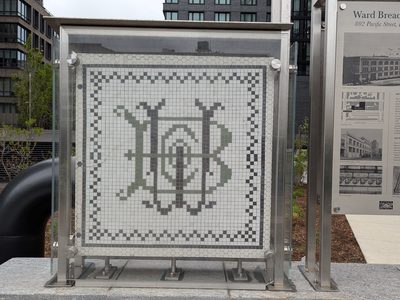
Prior to demolition of the Ward Bakery, two decorative terra cotta scroll units (image below left) were salvaged from the façade. A decorative floor mosaic from the building's entry featuring the monogram "W.B. Co." for "Ward Baking Company" (image below) was carefully lifted and conserved. These artifacts have been incorporated into this exhibit.
Nearby Plaques
Loading…
Found a problem with this plaque?